BUNDLED BANK ACCOUNT VERIFICATION
India’s 1st and only intelligent multi-method orchestration for account ownership verification
Built with configurable routing and fallback logic designed to eliminate silent customer drop-off.
TRUSTED FOR ACCOUNT VERIFICATION




INDUSTRY FIRST
#1 TSP to partner with NPCI to provide the industry-first Reverse Penny Drop product
INTELLIGENT ORCHESTRATION
An intelligent orchestration layer built to maximize successful account ownership verification
Route every verification attempt through the method most likely to succeed, without sending customers back to the start.

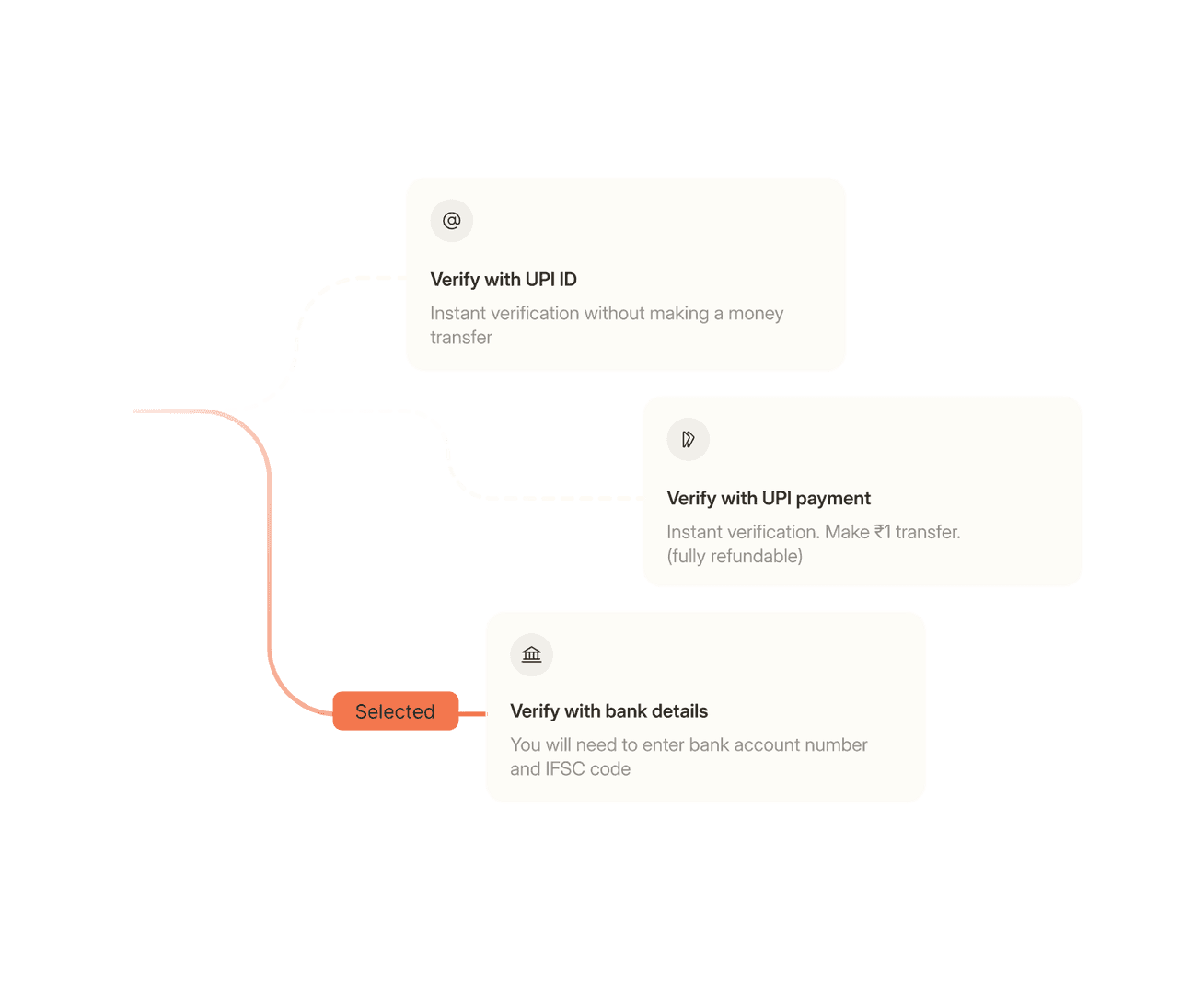


ONE API, THREE METHODS
Near-zero verification failures
Combine fast, familiar verification methods with automatic fallback so customers can complete account ownership checks without starting over.
INDUSTRIES WE SERVE
Zero drop-offs, maximum successful verifications
A resilient verification layer for regulated onboarding, mandates, payouts, refunds, and seller journeys.
Customer stories
INTEGRATION
Intelligent verification infrastructure, engineered for regulated growth
A production-ready integration that gives product and risk teams control without adding operational complexity.
COMMON QUESTIONS
FAQs
What is a bank account verification API used for?
A bank account verification API confirms that a bank account is valid and belongs to the intended customer, before a business processes a payout, refund, or mandate.
How does penny drop verification work?
Penny drop verification sends a small amount (often ₹1) to a bank account and checks the returned account holder name against the expected customer, confirming account ownership.
What is reverse penny drop and how is it different from standard penny drop?
Reverse penny drop asks the customer to make a ₹1 UPI payment to the business instead of receiving one, which removes the need to type an IFSC code or account number and returns tamper-proof verification data.
When is IFSC verification API needed instead of penny drop?
IFSC verification API is used to confirm a bank branch code is valid before initiating a payout attempt, often as a first-layer check before running penny drop.
What is VPA to bank account verification and why does it matter for UPI payouts?
VPA to bank account verification confirms which bank account is linked to a UPI ID, reducing failed payouts caused by an incorrect or outdated VPA-bank mapping.
How accurate is reverse penny drop compared to manual bank detail entry?
Reverse penny drop significantly reduces errors from manual IFSC/account number entry, since the customer only makes a UPI payment rather than typing detailed bank information.
Can bank account verification API be used for both payouts and mandate setup?
Yes — it's commonly used both to confirm payout account ownership and to validate the account behind a UPI or NACH mandate before setup.
What happens if penny drop verification fails?
A failed penny drop typically means the account is invalid, closed, or the name doesn't match — most platforms fall back to an alternate verification method like reverse penny drop.
Is bank account verification API mandatory for lending platforms in India?
While not universally mandated by a single regulation, RBI's fraud-risk-management expectations and standard lending practice make account ownership verification a near-universal requirement before disbursal.
How fast is reverse penny drop compared to traditional penny drop?
Reverse penny drop typically returns a result instantly since it relies on a live UPI transaction, whereas traditional penny drop can take longer due to bank-side processing delays.
Intelligent verification infrastructure built to deliver higher conversion
Replace brittle single-method checks with account ownership verification that keeps every eligible customer moving.